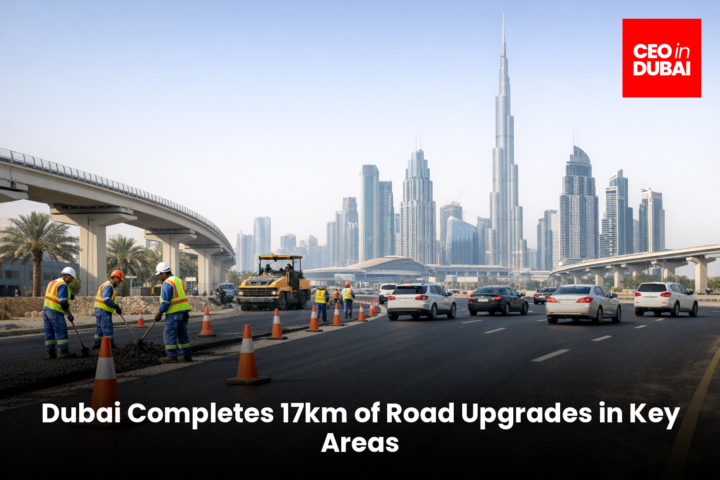
Dubai office sales hit AED 8.2 billion in Q1 2026, a 203% year-on-year surge that puts the emirate’s commercial property market firmly back at the centre of investor attention.
The rise was not just a volume story. Around 1,600 office transactions were recorded in the quarter, up nearly 75% from the same period last year, while average sale prices and rents also climbed. For founders, landlords and investors, the message is clear: quality office space in Dubai is no longer a back-office decision. It is becoming a strategic asset.
The numbers behind the surge
The headline figure is stark: AED 8.2 billion in office sales in the first quarter of 2026, up 203% year-on-year. That scale of growth shows how quickly commercial real estate has moved from a steady recovery phase into a more selective, value-led cycle.
Transaction activity also expanded sharply. Approximately 1,600 office deals were recorded during the quarter, reflecting a nearly 75% increase from Q1 2025. That gap between sales value growth and transaction growth matters. Values rose far faster than deal count, pointing to higher pricing, larger commitments and stronger appetite for better-quality assets.
Average office sale prices rose nearly 23% year-on-year to AED 2,029 per square foot. Rents followed the same direction, increasing 20% to an average of AED 191.9 per square foot. Buyers are paying more, tenants are paying more, and the market is rewarding well-located, higher-performing commercial stock.
Dubai recorded AED 8.2 billion in office sales in Q1 2026, a 203% year-on-year increase, alongside nearly 75% growth in transaction volume.
That combination gives the market its current edge. Rising prices without rising occupancy demand can become thin quickly. In Dubai’s case, business formation indicators are moving in the same direction as real estate demand.
Off-plan offices drive the market
Off-plan offices dominated the quarter. They accounted for more than 60% of total transactions and generated AED 6.4 billion in sales value. Compared with Q1 2025, that represents a 760% increase in off-plan sales value.
This shift says a lot about buyer psychology. Investors are not only competing for existing offices; they are also locking into future supply. That is a different posture from short-term speculation. It reflects a market where buyers expect demand for office space to remain firm and where new projects can attract capital before completion.
For developers and commercial property owners, the off-plan numbers are especially important. A strong off-plan office market gives builders clearer visibility on demand and gives investors a route into newer stock, often in locations where completed Grade A space is limited or tightly held.
It also changes the options for companies. Businesses that need space today still face current rental conditions, but firms planning growth can start looking at future buildings rather than waiting for scarce completed inventory to appear. In a market with rising rents, that forward planning has become more valuable.
Where buyers are concentrating
Activity was not evenly spread across the city. Al Sufouh 1 led the market with 380 office transactions in Q1 2026, followed closely by Business Bay with 373. Jumeirah Lakes Towers recorded 223 transactions, placing it among the quarter’s strongest-performing office districts.
Those three areas show the breadth of Dubai’s commercial demand. Business Bay remains one of the city’s most active business addresses. Jumeirah Lakes Towers continues to attract companies looking for established commercial infrastructure. Al Sufouh 1’s lead in transaction numbers points to strong appetite beyond the most traditional office clusters.
For investors, location is only part of the story. The broader market is maturing from volume-driven buying into value-driven acquisition, with stronger focus on premium offices and high-performing assets. That means buyers are looking harder at the quality of the building, the likely tenant base and the long-term ability of an asset to hold rent and resale value.
For business owners, the same logic applies from the other side of the lease. The address, building quality and ability to scale all affect hiring, client access and operating confidence. In Dubai’s current cycle, office choice has moved closer to boardroom strategy.
Supply is expanding, but the shortage remains
New space is arriving, but not enough to remove pressure from the market. Approximately 73,300 square metres of new office space was delivered in Q1 2026. That included DIFC Square, a 55,700-square-metre Grade A development that was fully leased.
The DIFC Square detail matters because it captures the wider supply issue. Even when major Grade A space enters the market, it can be absorbed quickly. Dubai is still facing a structural shortage of high-quality office space, with new supply expected to improve gradually from 2026 onwards.
That shortage helps explain why rents have risen by 20% and why off-plan sales have accelerated. If completed premium offices are limited, investors look ahead. If tenants cannot find enough suitable space, landlords gain pricing power. If developers see pre-sale demand, more commercial projects can move from plan to pipeline.
The pressure is particularly relevant for institutional-grade space. Larger companies and regulated firms tend to need buildings that meet specific standards, offer strong management and sit in established business districts. When that kind of space is scarce, the market separates quickly between average offices and the assets that can command stronger demand.
What this means for Dubai’s next business cycle
The office surge is backed by fresh company formation. The Dubai Chamber of Commerce registered more than 2,700 new companies in March 2026. DIFC attracted 775 new companies in Q1, while March registrations rose nearly 60% year-on-year.
Those numbers connect the property market to the real economy. More companies mean more teams, more licences, more client meetings and more demand for places to work. Not every new business needs a large office on day one, but growing firms do need credible workspace as they hire, raise capital and serve customers.
For founders, rising office costs add a new layer to growth planning. The cheapest space may not support hiring or client confidence. The best space may require earlier commitment. The balance between flexibility and permanence is becoming harder to ignore as rents move higher.
For investors, the signal is equally sharp. Dubai’s office market is no longer being led only by the number of deals. It is being shaped by asset quality, future supply, business formation and the shortage of institutional-grade stock. The next phase will depend on how quickly new offices arrive, how much of that stock meets premium demand, and whether companies keep registering at the current pace.
If those business growth indicators hold, Dubai’s office market will enter the rest of 2026 with buyers looking further ahead and tenants competing harder for the space that can support their next stage of expansion.